
Pennsylvania Voting Access Executive Order: What It Really Does, What It Doesn’t, and Why It Matters

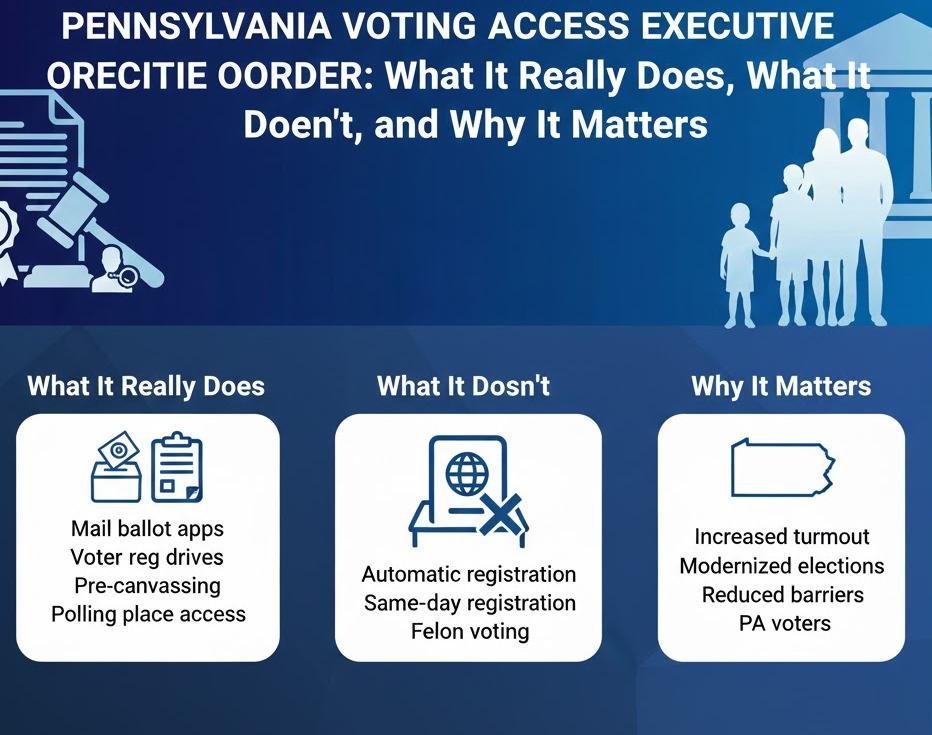
As a lawyer who has advised clients on election law issues, government authority, and constitutional challenges, I’ve learned one thing the hard way: voting rules are rarely as simple as headlines make them. Executive orders, in particular, create confusion because people assume they can rewrite the law overnight. They can’t.
The Pennsylvania Voting Access Executive Order has sparked strong reactions from voters, county officials, advocacy groups, and lawmakers. Some see it as necessary to expand access. Others see it as executive overreach. Both sides miss critical legal details.
Breaks down what the Pennsylvania voting access executive order actually does, how executive authority works in Pennsylvania, where the legal risks lie, and what this means for real people trying to vote or administer elections on the ground.
What Is the Pennsylvania Voting Access Executive Order?
The Pennsylvania Voting Access Executive Order is an action issued by the Governor directing executive agencies to take specific steps to improve voter registration access and participation.
In plain terms, it tells state agencies:
- To offer voter registration opportunities during interactions with the public
- To coordinate with the Department of State on registration outreach
- To reduce administrative barriers that discourage eligible voters from registering
What it does not do is change who can vote, how votes are counted, or what identification is required. That distinction matters legally.
Executive Orders in Pennsylvania: The Legal Framework
Before assessing the Pennsylvania Voting Access Executive Order, you need to understand what an executive order can and cannot do under Pennsylvania law.
What a Governor Can Do
A Pennsylvania governor may issue executive orders to:
- Direct executive agencies under their control
- Implement existing statutes
- Set internal administrative policies
- Coordinate inter-agency efforts
Executive orders are most effective when they operate within statutes already enacted by the General Assembly.
What a Governor Cannot Do
An executive order cannot:
- Create new election laws
- Override statutes passed by the legislature
- Change constitutional voting requirements
- Bind independent county election boards
In court, the first question is always jurisdiction: Does the Governor have authority over the actors involved?
Why Voting Access Is a Legal Flashpoint in Pennsylvania
Pennsylvania’s election system is decentralised. Counties run elections. The state sets rules. The Governor oversees executive agencies, but not county election boards.
This structure creates tension whenever a pennsylvania voting access executive order touches election administration.
I’ve represented clients where confusion over authority led to real consequences:
- Counties implementing policies they thought were mandatory
- Agencies are refusing to act because they fear lawsuits
- Voters are misinformed about their rights
Election law mistakes don’t just cause inconvenience. They can invalidate ballots or trigger litigation.
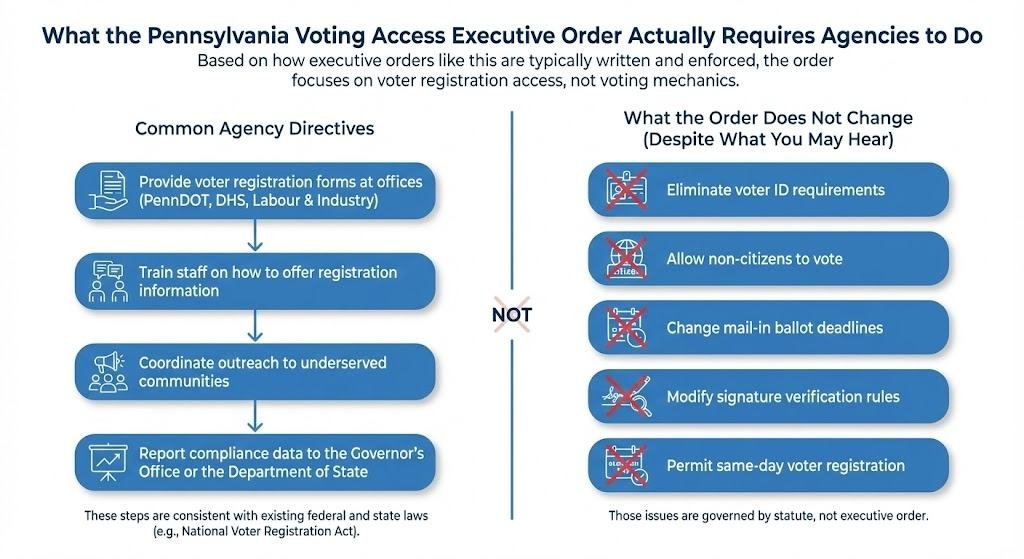
What the Pennsylvania Voting Access Executive Order Actually Requires Agencies to Do
Based on how executive orders like this are typically written and enforced, the Pennsylvania Voting Access Executive Order focuses on voter registration access, not voting mechanics.
Common Agency Directives
The order generally instructs agencies to:
- Provide voter registration forms at offices like PennDOT, DHS, and Labour & Industry
- Train staff on how to offer registration information
- Coordinate outreach to underserved communities
- Report compliance data to the Governor’s Office or the Department of State
These steps are consistent with existing federal and state laws, including the National Voter Registration Act (the “Motor Voter” law).
What the Order Does Not Change (Despite What You May Hear)
One of the most significant problems I see is misinformation. Clients often call worried about changes that aren’t real.
The Pennsylvania Voting Access Executive Order does not:
- Eliminate voter ID requirements
- Allow non-citizens to vote
- Change mail-in ballot deadlines
- Modify signature verification rules
- Permit same-day voter registration
Those issues are governed by statute, not executive order.
Legal Example: When Executive Orders Go Too Far
Several years ago, I advised a municipal client facing litigation after implementing a governor’s directive that conflicted with state law. The agency believed the executive order protected them. It didn’t.
Courts look at:
- The statutory authority behind the order
- Whether the agency exceeded its mandate
- Whether individual rights were affected
If an agency enforces a Pennsylvania voting access executive order in a way that conflicts with election statutes, the agency, not the Governor, is often the defendant.
How This Affects County Election Officials
County election officials are in a tough spot. They receive guidance from the Department of State, political pressure from both sides, and scrutiny from courts.
Important point: Counties are not under the Governor’s direct control.
If you’re a county official, the safest approach is:
- Follow the Election Code first
- Treat executive guidance as advisory unless backed by statute
- Document your decision-making
I’ve defended counties where good-faith reliance on informal guidance became a legal liability.
How the Order Affects Voters in Practical Terms
For most voters, the Pennsylvania Voting Access Executive Order affects registration opportunities, not Election Day procedures.
You May See:
- More voter registration forms at state offices
- Registration prompts during benefit applications
- Outreach campaigns in historically under-registered communities
You Should Still:
- Verify your registration status before deadlines
- Follow existing ID and ballot rules
- Avoid relying on verbal assurances from agency staff
I’ve seen voters lose their chance to vote because they assumed registration happened automatically. It often doesn’t.
Common Mistakes Voters Make
Even with expanded access, mistakes are common.
Mistake #1: Assuming Registration Is Automatic
Unless you explicitly complete voter registration, interacting with a state agency doesn’t register you.
Mistake #2: Missing Deadlines
The Pennsylvania Voting Access Executive Order does not extend statutory deadlines.
Mistake #3: Relying on Social Media for Rules
Election rules change slowly and through formal processes. Social media updates are often wrong.
Potential Legal Challenges to the Executive Order
Every significant election-related executive order faces legal scrutiny. The Pennsylvania Voting Access Executive Order is no exception.
Likely Grounds for Challenge
- Separation of powers
- Exceeding statutory authority
- Unequal application across counties
- Improper use of state resources
Courts generally uphold executive orders that implement existing law, but strike down those that attempt to replace it.
How Courts Analyse These Cases
From my experience litigating administrative law cases, judges focus on:
- The text of the order
- The statute it relies on
- The actions taken under it
- Actual harm, not speculation
If the Pennsylvania voting access executive order merely improves access to registration already allowed by law, it stands on firmer ground.
Advice for State Agencies Implementing the Order
If you work for a state agency affected by the Pennsylvania voting access executive order, here’s practical legal advice:
- Train staff carefully and consistently
- Avoid adding unofficial requirements
- Do not give legal advice to voters
- Keep written policies aligned with statutes
Most lawsuits arise from frontline confusion, not bad policy.
Advice for Advocacy Groups and Campaigns
Advocacy groups often overstate what executive orders accomplish.
From a legal standpoint:
- Do not promise voters outcomes that the law doesn’t support
- Emphasise deadlines and verification
- Encourage voters to confirm registration independently
Misleading a voter, even unintentionally, can cause disenfranchisement.
Why This Executive Order Matters Long-Term
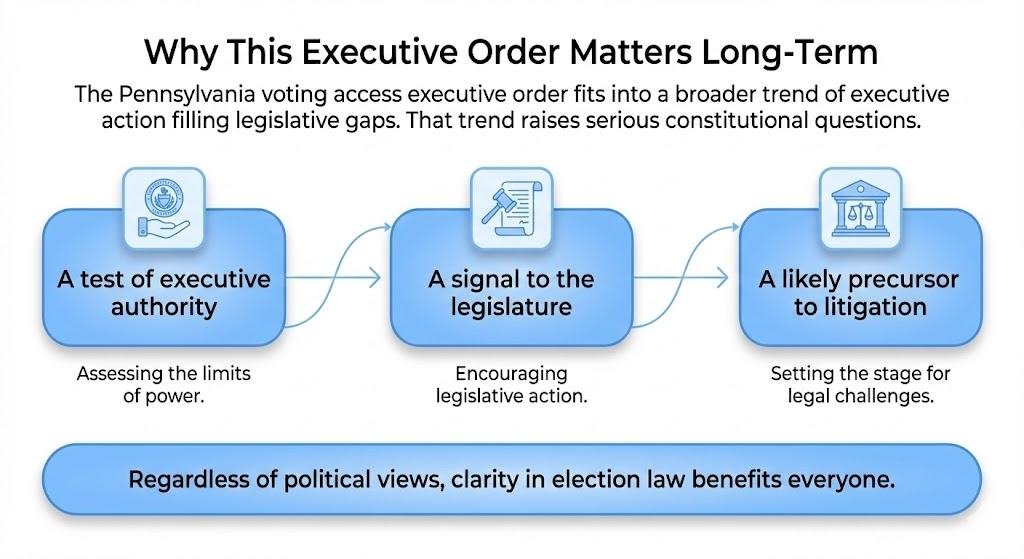
The Pennsylvania voting access executive order fits into a broader trend of executive action filling legislative gaps. That trend raises serious constitutional questions.
As a lawyer, I see this order less as a final solution and more as:
- A test of executive authority
- A signal to the legislature
- A likely precursor to litigation
Regardless of political views, clarity in election law benefits everyone.
Frequently Asked Questions
Can the Governor change voting laws by executive order?
No. The Governor can only direct executive agencies within the scope of existing law.
Does this order allow non-citizens to vote?
No. Citizenship requirements remain unchanged.
Does it affect mail-in ballots?
No. Mail-in voting rules are statutory.
Final Thoughts
Voting access cases are emotional because they touch democracy itself. But courts don’t decide cases based on emotion. They decide based on authority, text, and evidence.
The Pennsylvania Voting Access Executive Order is legally meaningful, but limited. It expands access to registration opportunities within existing law. It does not rewrite the Election Code.
If you are a voter, stay informed and verify everything. If you are an official, follow the statute first. And if you’re facing a legal dispute related to this order, understand that executive power has boundaries and courts enforce them.
Clarity, not confusion, is what protects the vote.