
NYSCEF Explained: A Practical Guide From a New York Lawyer

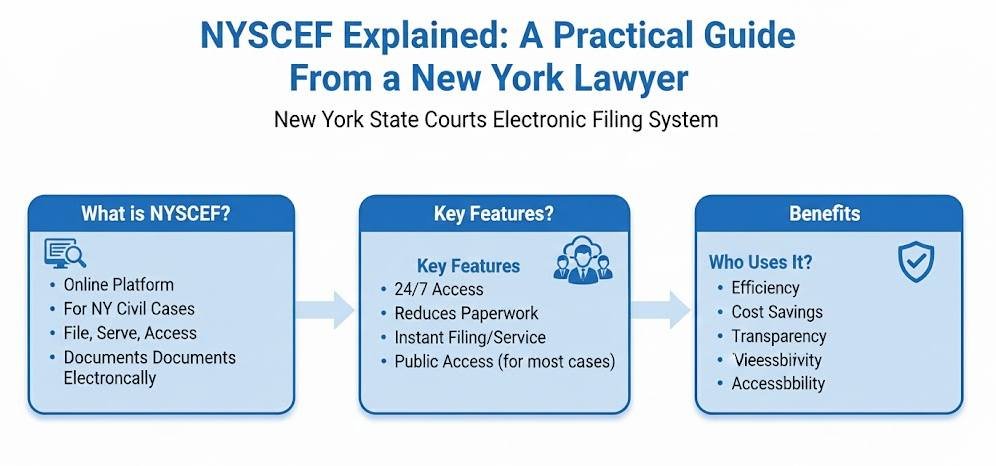
If you are involved in a civil case in New York, you will almost certainly encounter nyscef. As a practicing attorney, I work with nyscef nearly every day. I have filed motions late at night, corrected rejected filings minutes before deadlines, and explained to clients why a document they thought had been filed never legally counted.
This article explains nyscef in real cases, not how it appears in official guides. I will cover how it actually functions, where people make costly mistakes, and the advice I regularly give clients and younger lawyers.
What Is NYSCEF?
Nyscef stands for the New York State Courts Electronic Filing system. It is the online platform used to file, serve, and access documents in many New York civil cases.
Instead of walking documents to a courthouse clerk, parties upload filings through nyscef. Once accepted, those documents become part of the official court record.
Courts That Use NYSCEF
Not every court or case uses nyscef, which causes frequent confusion.
Nyscef is commonly used in:
- Supreme Court civil cases
- Commercial Division matters
- Court of Claims
- Many Surrogate’s Court proceedings
- Some Family Court matters
Criminal cases do not use nyscef.
Mandatory Versus Optional NYSCEF Cases
Mandatory NYSCEF Cases
In mandatory cases, parties must use nyscef unless they receive court permission not to.
These usually include:
- Commercial Division cases
- Most Supreme Court civil actions
- Many post-judgment proceedings
Optional NYSCEF Cases
In optional cases, parties may choose whether to use nyscef.
This is where serious mistakes happen. I have seen cases delayed because one side assumed nyscef applied automatically.
Case Example
I represented a business owner who was sued in the Supreme Court. The plaintiff uploaded everything to nyscef but never properly served my client. They assumed electronic filing was the same as service. It was not. The case was dismissed for improper service.
How NYSCEF Works in Real Practice
Filing Documents Through NYSCEF
To file using nyscef, you must:
- Register for a nyscef account
- Select the correct case index number
- Upload the document as a readable PDF
- Choose the correct document type
- Pay the required filing fees
If any step is wrong, the filing may be rejected or accepted but legally defective.
Service Through NYSCEF
One of the most misunderstood issues is service.
- Nyscef service only applies if all parties are required to e-file or have consented
- If even one party is exempt, traditional service rules apply
- Proof of service may still be required
I regularly tell clients never to assume nyscef equals valid service.
Common NYSCEF Mistakes I See Every Week
Filing Under the Wrong Document Type
Uploading a motion as correspondence or an affirmation as an affidavit can result in rejection or confusion. Judges notice these errors.
Missing Deadlines Due to Rejected Filings
Uploading a document does not always mean it is filed. If nyscef rejects a submission, deadlines do not pause automatically.
Courts expect parties to:
- Monitor confirmation notices
- Correct errors immediately
- Seek relief promptly if technical issues arise
Not Checking the NYSCEF Docket
Many clients miss deadlines because they never check nyscef.
I advise clients to:
- Check nyscef regularly during litigation
- Enable email notifications
- Download and save all filings
Understanding NYSCEF Notices
Not all nyscef notices are equally important.
| Notice Type | Why It Matters |
|---|---|
| Filing confirmation | Proof the document was accepted |
| Rejection notice | Immediate action required |
| Service notice | Response deadlines may start |
| Payment receipt | Confirms filing validity |
NYSCEF and Self Represented Litigants
I often represent people who started cases on their own and later hired counsel. Nyscef is usually where problems began.
Common Problems for Pro Se Users
- Uploading unreadable scans
- Filing documents without notarization
- Missing required exhibits
- Assuming judges review filings immediately
Courts apply procedural rules equally, even when using nyscef.
Confidential Information and NYSCEF
What Should Never Be Filed
Once uploaded to nyscef, documents become part of the court record.
I have seen serious consequences when parties filed:
- Full Social Security numbers
- Bank account details
- Medical records without sealing motions
- Minor children’s personal information
Redaction is always the filer’s responsibility.
Sealing and Redaction Procedures
To protect sensitive information, parties must:
- File a motion to seal or redact
- Upload proposed redacted documents
- Wait for court approval
Failure to follow this process through nyscef can permanently expose private information.
Orders, Decisions, and Judgments on NYSCEF
Many clients expect judges to mail decisions. That often does not happen.
Judges frequently upload decisions directly to nyscef. Once uploaded, deadlines may begin immediately.
Why This Causes Problems
I have seen appeals lost because no one checked nyscef for weeks. Courts often rule that availability on nyscef constitutes notice.
Practical Advice
- Check nyscef weekly during motion practice
- Check daily after oral argument
- Save and download decisions immediately
Calculating Deadlines Under NYSCEF
Deadlines may run from:
- The date of filing on nyscef
- The date of service through nyscef
- The date an order is entered
Misreading these triggers is a common and costly error.
Final Thoughts
Nyscef is efficient when used correctly and unforgiving when it is not. Most problems I see are not legal issues but procedural mistakes that could have been avoided with better understanding.
Whether you are a lawyer or a litigant, treating nyscef seriously is essential. Check it often, read notices carefully, and never assume the system will correct your mistakes.
Understanding nyscef is not optional in New York litigation. It is part of the practice of law now, for better or worse.